

Introduction
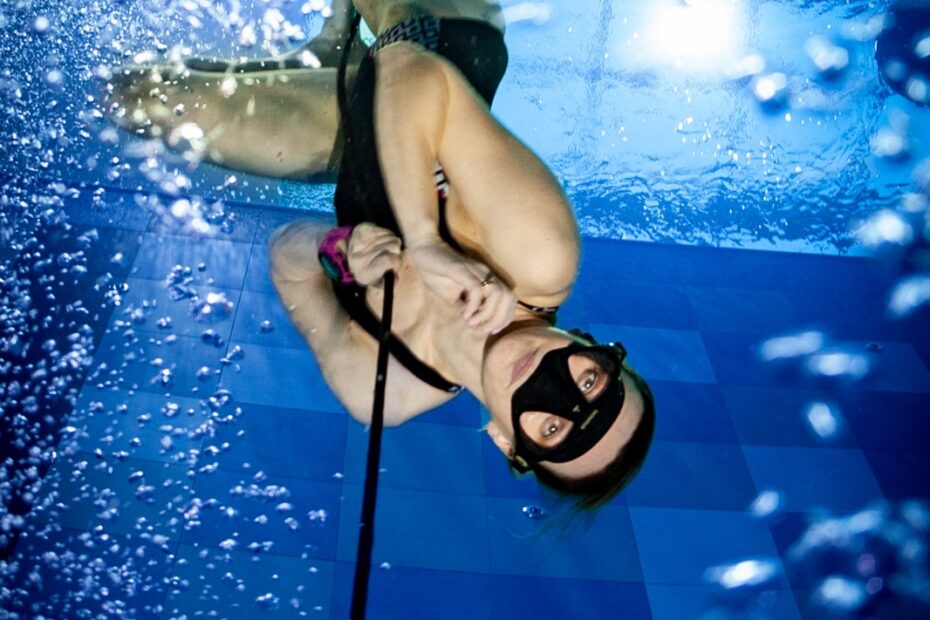
Magdalena Solich Talanda is one of the most respected figures in international freediving. A world champion, world record holder, and the first Polish woman to set a freediving world record, she has spent more than a decade pushing the limits of human performance while remaining deeply committed to technique, safety, and personal growth. In this conversation, she shares her thoughts on silence, trust, discipline, and what it truly means to dive at the highest level.
Interview
A: Can you describe yourself as a freediver?
M: I’m just a girl, and a professional freediver with 12 years of experience. I know what I’ve achieved, but as an athlete I stay fully focused on training. I’m very determined. I know my strengths and weaknesses, and I’m always working on improving. Every day starts with the same goal: to do my best. I don’t chase records in every session. Some days are not made for deep or long dives, but every day is for doing as much as I can with what I have. I freedive because I love it. The effort, the discipline, the training… even after 12 years, I still enjoy every dive.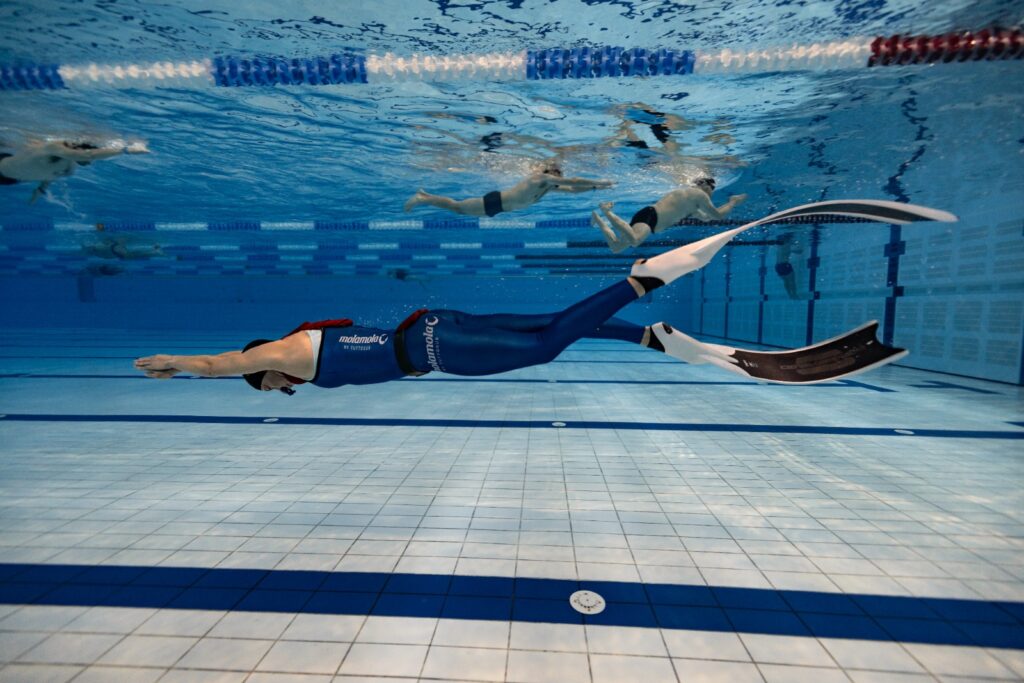
A: Freediving is often called “a sport of silence.” What does that silence mean to you?
M: Silence is one of the most beautiful parts of freediving. Underwater, it allows me to fully focus on the dive and be completely present. Even in competitions, that silence is unique. Unlike many other sports, there is no noise or chaos, just calm before the dive. It helps you prepare mentally. After a long day of work as a teacher, that silence feels even more powerful.
A: Control or surrender underwater?
M: After 12 years, I feel in control of almost every dive. But I’m still a human. Some days are harder than others. Sometimes doubts appear, but I try to leave everything on the surface before I dive.
A: What is the biggest misconception about elite freediving?
M: People often ask: “Is it safe?” or “Don’t you lose brain cells?” Freediving is an extreme sport, but it is also highly structured and safe when the rules are followed. The most important one is simple: never dive alone. It’s like climbing without a belayer—it’s just not done. Safety is always part of the sport.
A: Can you describe a moment underwater when everything felt completely perfect?
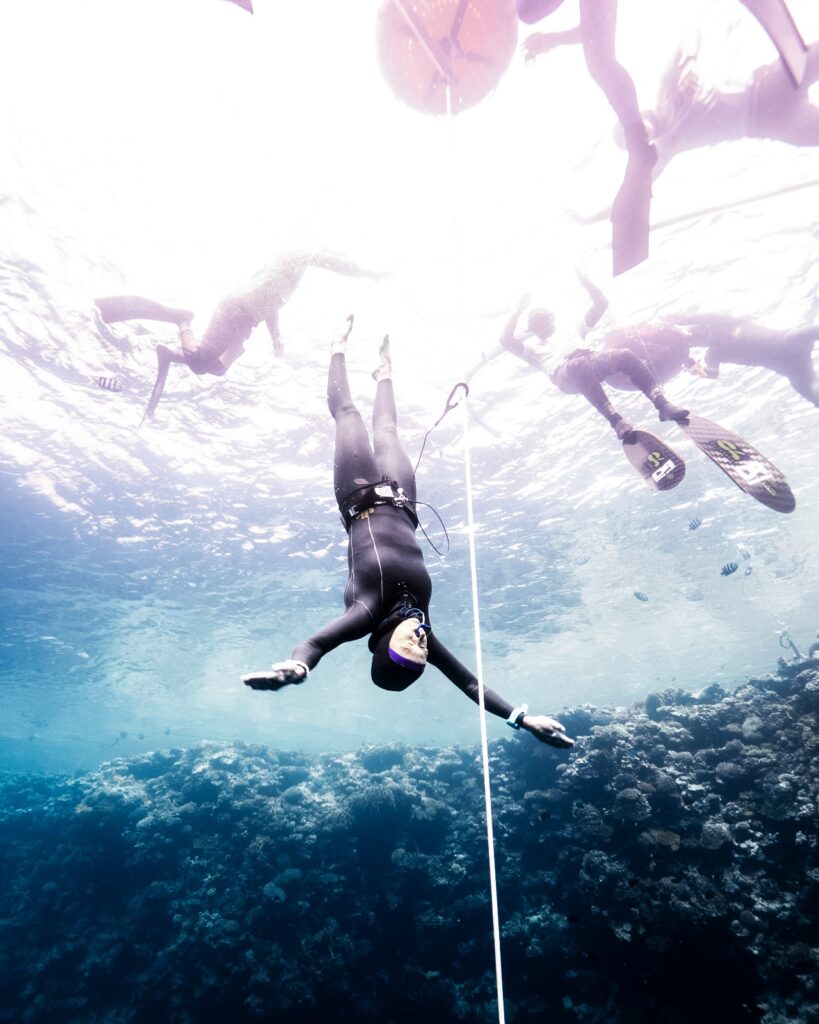
M: I’ve had many. I’m very detail-focused and constantly refining my technique, which makes many dives feel smooth and natural. One unforgettable moment was in the deepest pool in Europe, in Mszczonów. After a break from depth training, I felt freefall again, that pure, effortless feeling underwater.
A: What is harder for you: pushing physical limits or staying mentally calm?
M: Both are challenging. The body can adapt to a lot, we prove that in training. But the mind is the key. Without mental readiness, nothing works.
A: Do you think freediving changes the way a person sees fear?
M: Not really. I’ve never felt fear in freediving. I trust the sport, the rules, and the system. It’s not something scary to me—it’s something I understand. And when you understand it, you enjoy it.
A: What is something you had to change or unlearn to become a better freediver?
M: Freediving improved my entire lifestyle. I take better care of my health, recovery, sleep, nutrition, and mindset. I don’t drink alcohol. I do regular check-ups and focus on balance in life. Peace outside the water is just as important as performance in it.
A: Have you ever had a dive where your body said “no,” but your mind said “yes”, or the other way around?
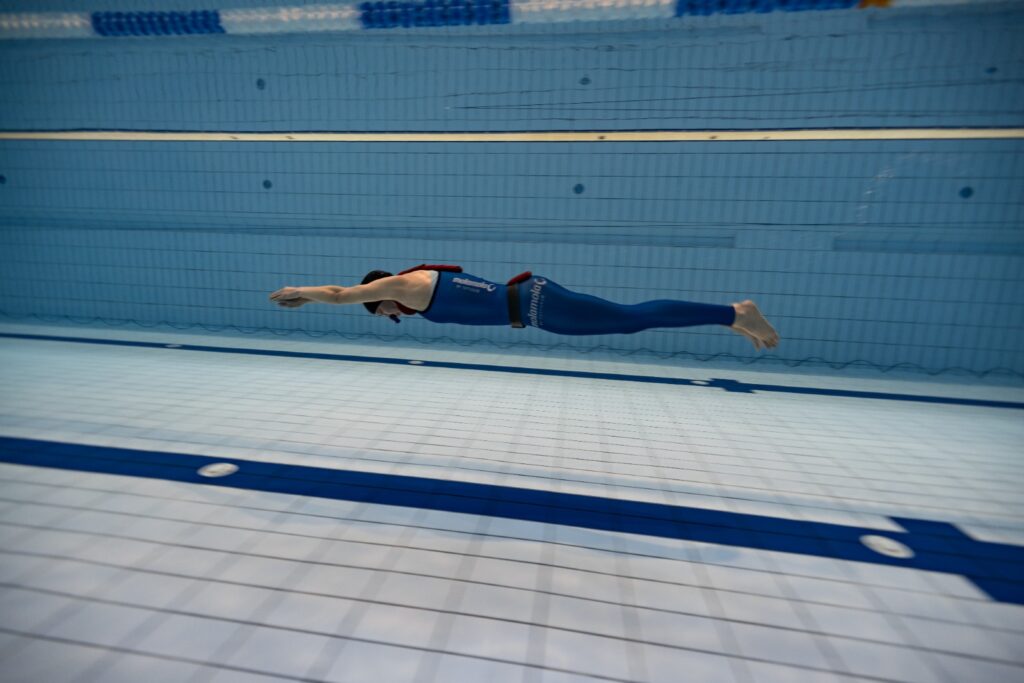
M: It happens often. In training, I usually push through because I trust my preparation and always dive with a buddy. The body can handle more than we think. But sometimes the mind is the limit, even if the body is ready. A dive only works when the mind is fully present.
A: What role does trust play in your sport?
M: Trust is everything.
First, trust in my coach, who is also my husband. We plan everything together, analyze training daily, and make decisions as a team.
Second, trust in my buddy. Without feeling safe, you cannot train effectively.
And finally, trust in myself, which is built every single day.
A: If you could experience one dive just for the feeling once more, which one would it be?
M: Training dives are my favorite. No pressure, just pure diving. Competition dives are special too, but the best feeling is when everything is simple, natural, and effortless.
A: How do you think freediving changes a person over time?
M: Freediving has shaped many parts of my life, but it hasn’t changed who I am at my core. My values remain the same. What it gave me is discipline, awareness, and respect, for both sport and life. To me, being a good athlete always starts with being a good person.
A: What legacy would you like to leave for younger generations?
M: “Legacy” is a powerful word.
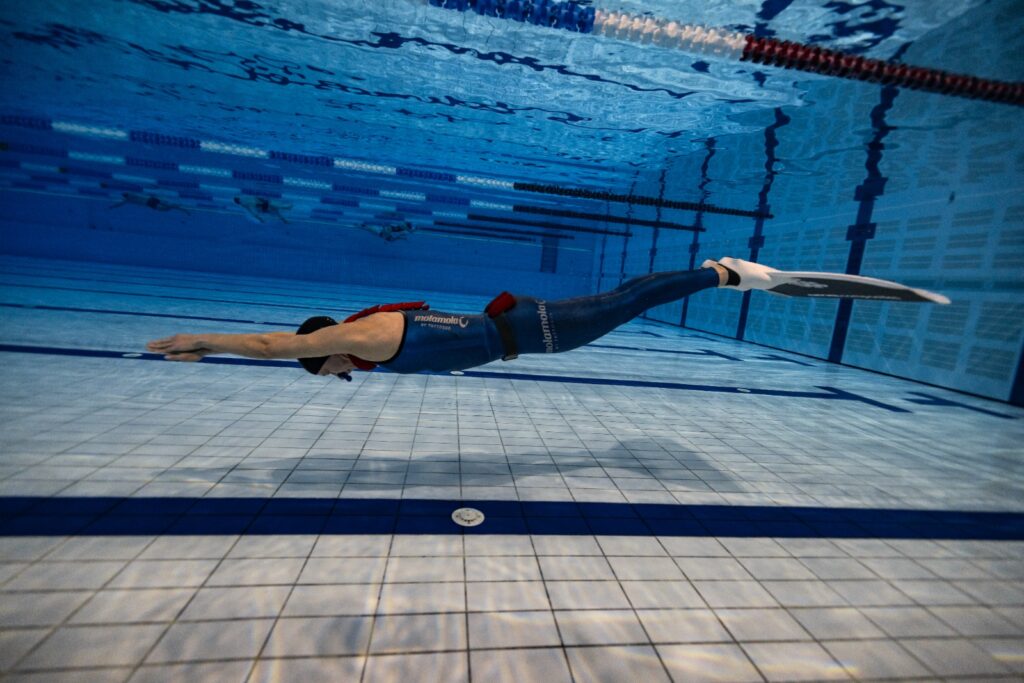
Technique is very important to me. I believe my DNF (Dynamic No Fins) technique is among the best in the world. In freediving, results matter, but I believe they should also be done with style. I’m proud to be the first Polish woman to break a world record (DNF 185 m, 2016) and to become a world champion. I hope this helped open doors for women in Polish freediving.
A: What is your secret tip for record dives?
M: I never think about a record before the dive. I only focus on doing my best at that moment. If it becomes a record, it is great. If not, I still win, because I gave everything I had that day.
It’s a simple mindset: control what you can and let the result follow.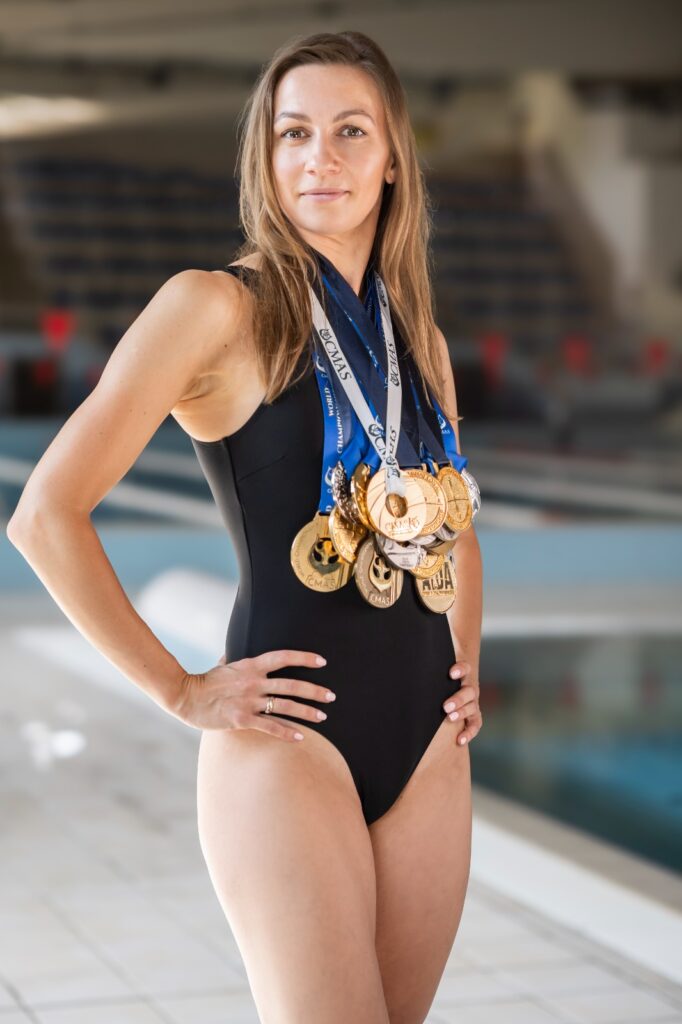
A: How many medals do you have, and how heavy are they?
M: I only keep World Championship medals. The rest I give to children at competitions or donate to charity. The most important ones are my 26 World Championship medals and the bronze from the 2025 World Games. And honestly, I have no idea how heavy they are. But wearing them all at once for a photo felt like a workout.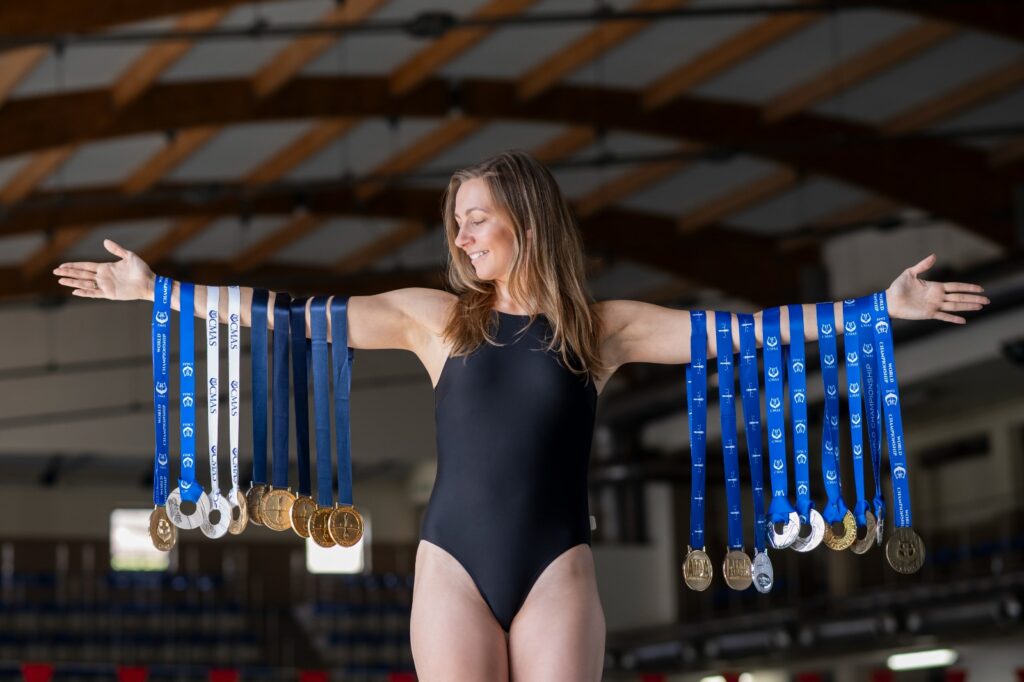
A: Can you share something fun about yourself?
M: Even at 36, I still feel like a kid. I love Disney movies, puzzles, riddles, and logic games. I also enjoy gardening, I grow vegetables with my parents, which is a wonderful way to spend time together. I also have an amazing dog, Stella, who is my partner in crime. I smile a lot, because I simply enjoy life.
Closing
Speaking with you is a reminder that freediving is about far more than meters, records, or medals. Behind every top-level performance lies daily work, trust, discipline, and the ability to focus on the process rather than the outcome.
That is exactly why you are an inspiration not only to athletes, but also to people far beyond the world of sport. Your story shows that true strength is not built in a single record-breaking dive, but through hundreds of ordinary days spent consistently doing the best you can.
Thank you for your openness, your energy, and the time you dedicated to this interview. I wish you many more joyful moments beneath the surface, countless unforgettable dives, and plenty of beautiful experiences on the journey ahead.