




Introduction
Alessandro Cianfoni is an Italian, Rome-born athlete now living in Switzerland, whose life blends elite sport, medicine, and resilience. After a spinal cord injury caused paralysis at veri young age, he rebuilt his path while undertaking medical school and a career as a neuroradiologist and university professor, proving that limits can be redefined.
Before freediving, he won the Strait of Messina swim in 1998. After his injury, he returned to competition through wheelchair basketball and became Swiss champion in wheelchair tennis, showing remarkable determination across disciplines.
Today, he competes at the highest level in para freediving—breath-hold diving adapted for athletes with disabilities. Despite paralysis, he relies on technique, breath control, and mental strength, showing that performance underwater goes beyond physical limitations.
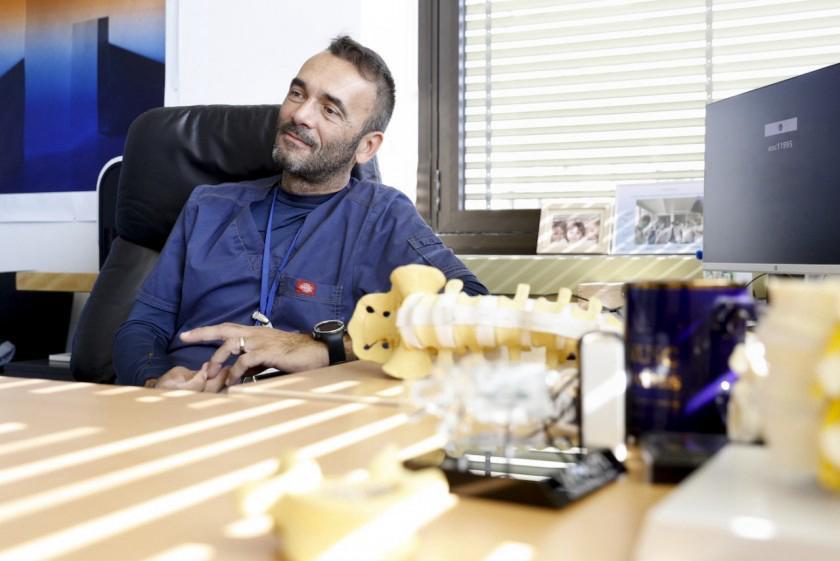
Alessandro in his office. Photo credit ©Alesandro Cianfoni
Alessandro, thank you so much for taking the time to answer our questions. We’re excited to share your story, your journey, and your passion for freediving with our readers.
Could you briefly introduce yourself?
A:My name is Alessandro Cianfoni, I am 54 years old. I come from a small town near Rome, in Italy. Today, I live in Lugano, in the Italian-speaking part of Switzerland.
Q: Can you share what led to your paralysis and how it changed your life?
A: I was a very active and sporty kid. During a ski training session with my school team, I had an accident that caused a spinal cord injury. At first, I was completely paralyzed. After a long period of rehabilitation, I regained some movement in my legs, but I never returned to full mobility, and I move around using a wheelchair. This injury certainly changed my life path, but I could not say in which sense.
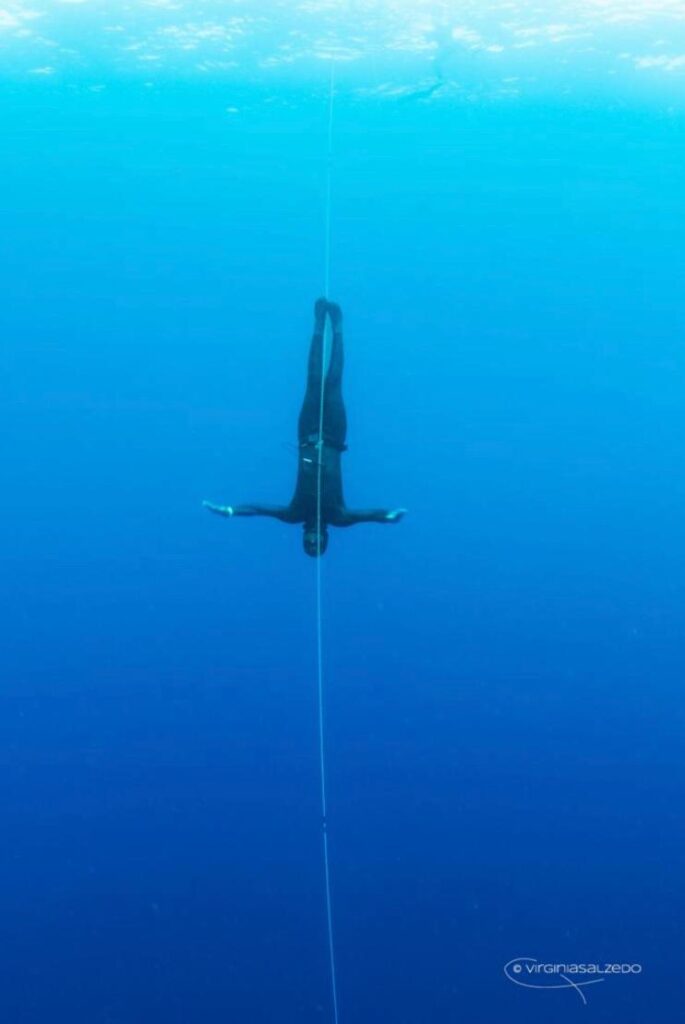
Photo credit ©Virginia Salzedo
Q: How did sport return to your life after that?
A: Sport never really left my life. Even in the hospital, I was already thinking about going back. I treated my rehabilitation like a competition, always setting goals. At first, I didn’t want to accept wheelchair sports, because I believed I would fully recover but one day, I saw a wheelchair basketball team on TV, and I didn’t see the wheelchairs—I only saw athletes. That’s when I decided to get on the court again.
Q: What led you to freediving, and what does it give you?
A: My love for water has always been there since childhood, and I freedive since I can remember, but competitive freediving became important later, after other sports like wheelchair basketball, wheelchair tennis and swimming. I have always been deeply admired by great freediving legends like Maiorca, Mayol, Pelizzari, getting into freediving competitions felt like a childhood dream come true. Freediving is very demanding—mentally, emotionally, and physically. It’s about controlling something essential: necessity to breathe. Learning to control your breathing gives you a sense of power and deep connection with yourself.
Q: How did you turn such a life-changing event into motivation?
A: It was a big change, of course, but I never saw it as a tragedy. From the beginning, I focused on what I could do next. Even today, I don’t see it as a real obstacle, more as a limitation in some situations, but not something that stops me from living my life.
Q: You recently achieved a world record in indoor dynamic no fins freediving. What did that moment feel like? I am proud I witnessed it live.
A: It was a beautiful dive. I wasn’t even sure I was fully prepared. But during the dive, I felt more aware and in control than ever before. Especially in the final part, I stayed calm and really listened to my body. I didn’t train more than usual, but I improved the quality of my training. Less training, but with more focus—and it worked.
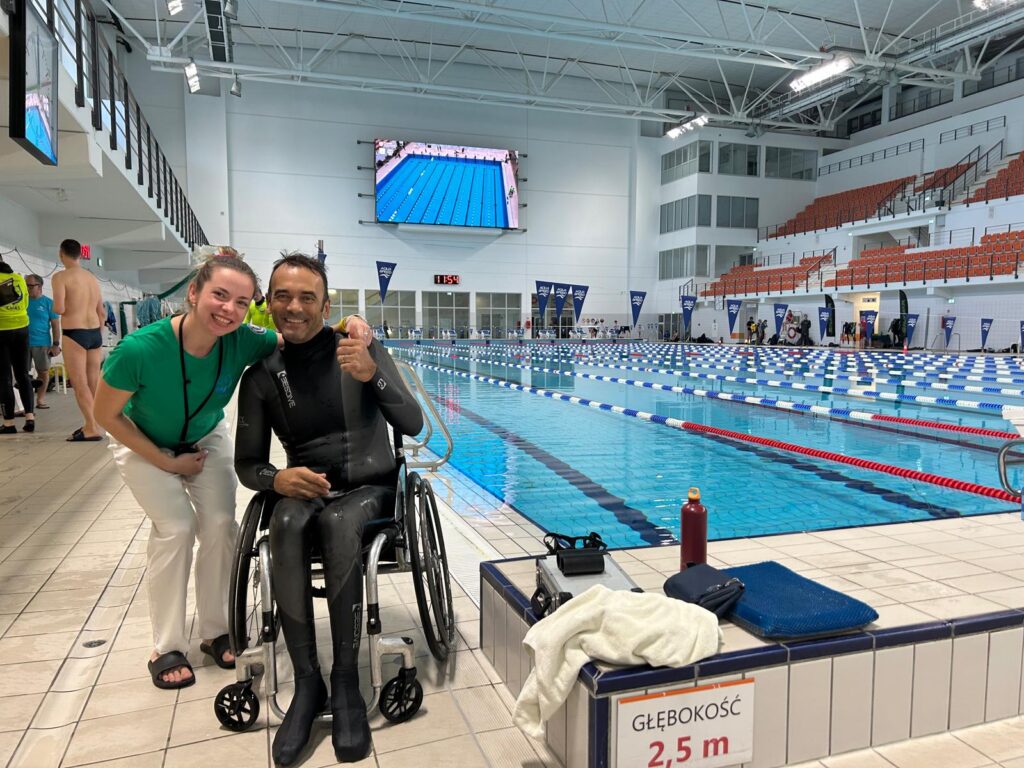
Alessandro and Anna on CMAS Freediving World Cup 2026 in Lodz, Poland. Photo credit ©Anna Oravec
Q: What goes through your mind during a deep dive?
A: It’s about awareness and letting go at the same time. You need technique, but also calmness. You must “normalize” what you’re doing, even if it feels extreme. Fear should not take over. You need to respect your limits, without fighting them—you would rather work along with them.
Q: What do you enjoy outside of freediving?
A: I have a very busy life—I’m a physician and a university professor. But I love being in nature, especially near water. I enjoy swimming, tennis, skiing, and spending time with my family. I have three children and watching them grow is one of the most rewarding parts of my life. Sometimes, when “the stars align” we even get to dive all together, priceless moments.
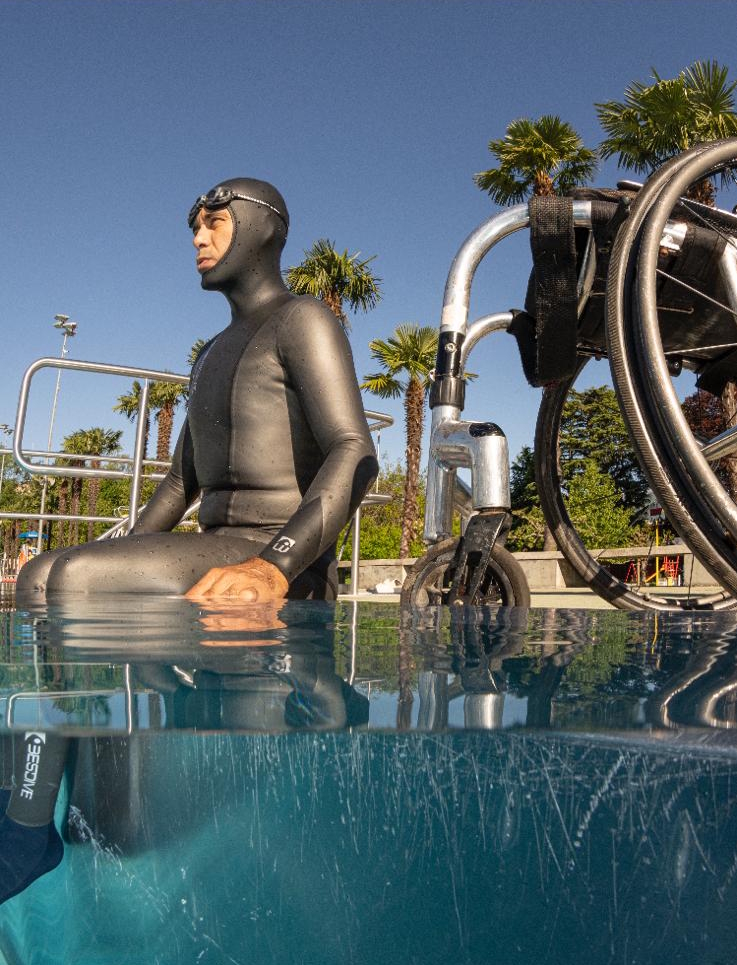
Alessandro and his wheelchair by the pool. Photo credit © Franco Banfi
Q: What role did water play in your childhood?
A: I grew up in the countryside, not far from the sea. I always loved the water. I spent hours in the ocean, often just dreaming about diving and exploring. It was my passion from a young age.
Q: What do you value most about Italian culture?
A: I am very attached to Italian culture and language. One important aspect is the appreciation of beauty and elegance—art, cities, fashion, everyday life, behaviors. Another is adaptability. In Italy, things are not always perfect, and you learn to adjust and find solutions. That mindset is very valuable.
Q: What does a perfect day look like for you?
A: A perfect day is close to nature, preferably by the water, and shared with people I love. But I also enjoy being alone sometimes. I don’t like to rest much—I always need some physical activity to get tired and relaxed enough.
Q: Looking back, what are you most proud of?
A: I’m proud of the journey itself—of continuing to move forward and making the most of what I have. If I see my life, I would say I made the ends meet, so far.
Q: What message would you like to share with others facing challenges?
A: Life is rich, vast, and beautiful. No matter the challenge, it is always worth living. Instead of focusing on what we lose, we should focus on what we still have—and what we can do with it. Also, we should protect the beauty of our world, especially nature and the oceans, and treat others with respect and kindness.
Closing
Alessandro, thank you again for your time and for sharing your inspiring story with us.
I wish you all the best in life and many safe and successful dives ahead.
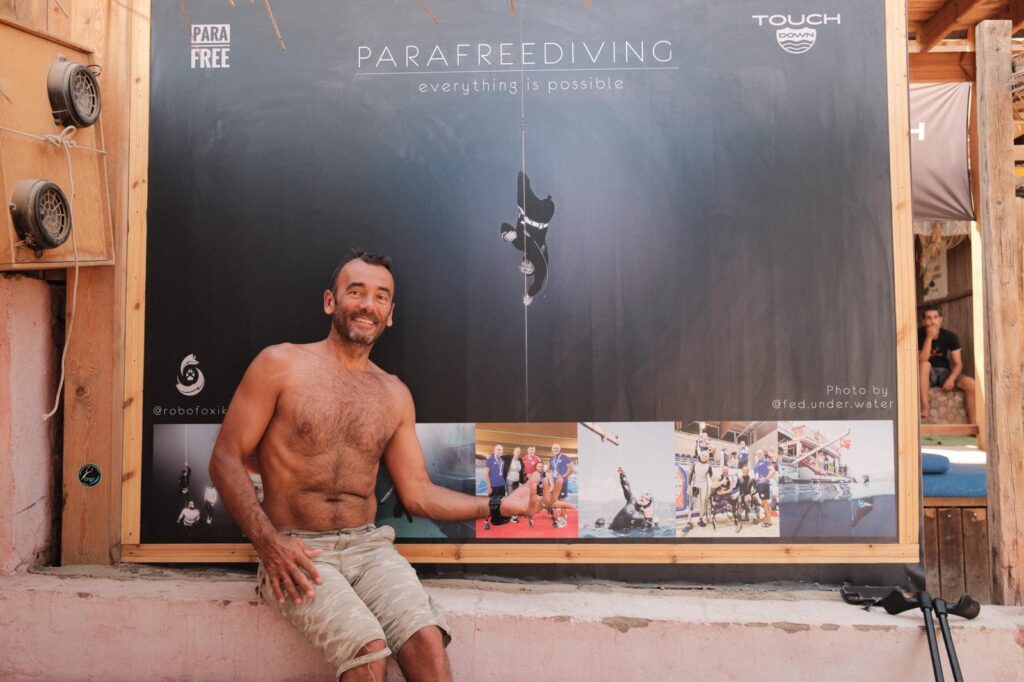
Alessandro at Touchdown space, Blue Hole, Egypt. Photo credit ©Alessandro Cianfoni