





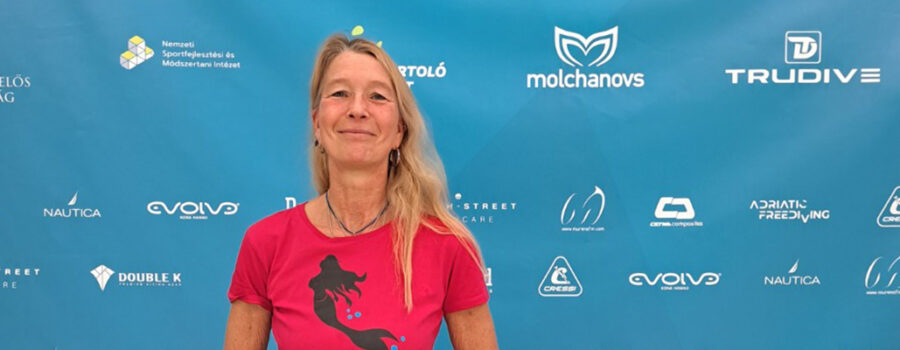
Who is Heike?
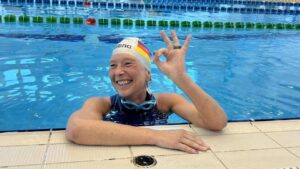
Heike Monika Schwerdtner (born 1970 in Regensburg, Bavaria, Germany) is one of the most inspiring figures in modern freediving. Specializing in static apnea (holding the breath motionless for maximum time) she has proven that world-class performance is not limited by age, but shaped by resilience, discipline, and curiosity.
A former competitive swimmer and platform diver, Heike built her athletic foundation early. At the same time, life presented challenges that required strength beyond sport. Those experiences shaped her mental endurance — something that later became central to her freediving success.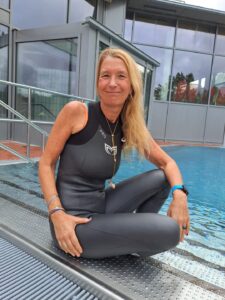
She discovered freediving in her early forties after years working as a scuba instructor. Her love for the sport developed gradually. The beginning came with unexpected psychological challenges, including vivid nightmares after long breath-holds, but over time her mind and body adapted.
In 2024, at 54 years old, she broke the world record in static apnea, demonstrating that peak performance can come later in life. In 2025, at the Noxy Cup 2025, she achieved an extraordinary 9 minutes 30 seconds, setting the absolute world record in static apnea.
You can watch the performance here:
https://www.youtube.com/watch?v=MKAlF2T5bkA
Anna: You’re known today for extraordinary breath control. What shaped you physically and mentally in your early years?
Heike: I was a competitive swimmer and a platform diver as a child and teenager. Sport was always part of my life. But my childhood and later parts of my life were not as easy as they could have been. I had to learn a lot through struggles. I think that made me resilient. No matter what happened, I always followed my heart.
Anna: When did you first discover freediving? Was it love at first dive?
Heike: My love for freediving grew over time. I was in the water almost my whole life and started as a scuba instructor. In my early forties, I discovered freediving. The beginning wasn’t easy. After long breath-holds, I had nightmares. But after a while, they disappeared.
Anna: When did you realize you had exceptional potential at static apnea?
Heike: From the beginning, people told me I was pretty good at static. So, I followed this path.
Anna: Freediving has multiple disciplines. Why did static apnea become your focus?
Heike: When I started freediving, I was still a single mother with a teenager at home. I loved that in static somebody takes care of me and gives me full attention. That felt special. On top of that, in dynamic disciplines I get strong lactic acid in my legs, and I don’t like that pain very much.
Anna: What makes static apnea emotionally different for you compared to dynamic?
Heike: Static feels more internal. It’s calm and deep. Dynamic feels more physical for me.
Anna: During a long breath-hold, what is happening in your mind?
Heike: There happens a lot: focusing, visualizing, sometimes trying to think about nothing. But I never count.
Anna: When contractions start and the urge to breathe becomes strong, how do you avoid panic?
Heike: It’s physical and mental training. The more often you train it, the better you stay composed and don’t panic. And you have to completely trust your buddy.
Anna: What does a typical training week look like for you?
Heike: I train dynamic twice a week and static twice a week. I also do one cardio session and one gym training session.
Anna: How much of your success comes from mental training versus physical conditioning?
Heike: Both are very important. You need to be in good physical condition and a relaxed mental state.
Anna: What is your emotional state before a competition? How do you get ready for record attempts?
Heike: I never do record attempts — that would be too much stress. At Noxy Cup, it wasn’t about a record for me. It was just a static competition. Of course I’m nervous, but I try to stay curious.
Anna: What advice would you give athletes who want to improve their static breath-hold safely?
Heike:
1. Train static regularly.
2. Train the official top (your competition protocol).
3. Train the end of your dive — especially surface protocol and hook breathing.
Giving more advice is difficult because every athlete needs different things.
Anna: Looking ahead, what motivates you most — breaking records, exploring limits, or self-discovery?
Heike: Exploring my personal limit. I’m really curious how far I can go — or if I can repeat the 9 minutes 30 seconds again.
Thank You, Heike!
A heartfelt and sincere thank you to Heike Monika Schwerdtner for taking the time to answer these questions so openly and thoughtfully. Her reflections offer valuable insight into the mindset behind world-class static apnea, and into the quiet strength that defines her journey.